







How to Use AI to Build a 7-Day Customer Acquisition Sprint That Actually Converts
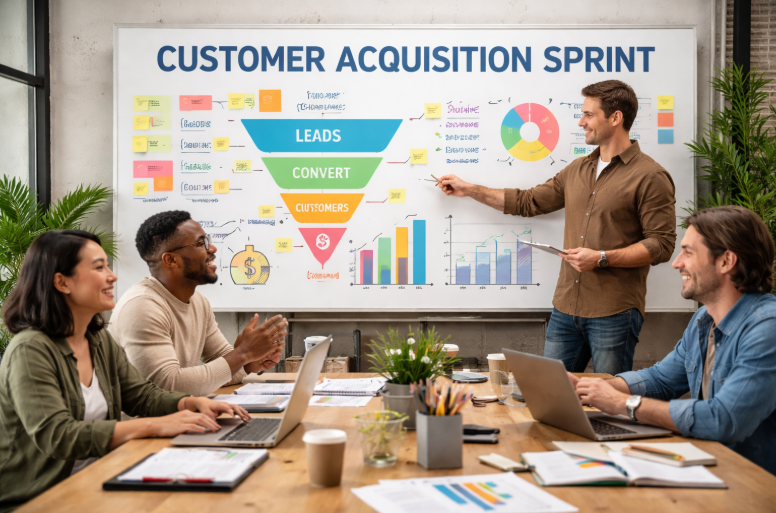
Most businesses don’t struggle with ideas—they struggle with execution speed. The gap between planning and launch is where momentum dies, budgets stall, and competitors move faster. A 7-day customer acquisition sprint eliminates that delay and replaces it with structured action.
Artificial intelligence makes this possible.
Instead of spending months researching, drafting, testing, and optimizing, AI compresses the entire acquisition cycle into one focused week. When structured correctly, this sprint becomes a repeatable system for validating offers, generating qualified leads, and driving measurable conversions.
This guide outlines exactly how to use AI to plan, execute, and optimize a high-converting 7-day customer acquisition sprint that produces real business results.
Why a 7-Day Customer Acquisition Sprint Works
A short sprint forces clarity, action, and focus. Instead of overplanning, you prioritize rapid validation. With AI-powered tools, you can:
Identify high-value customer segments
Generate persuasive messaging
Create optimized landing pages
Launch targeted campaigns
Analyze data in real time
Refine performance quickly
The key is structured execution.
Day 1: Define Your Ideal Customer Profile (ICP)
Your sprint begins with precision targeting.
Use AI to:
Analyze existing customer data
Identify patterns in purchasing behavior
Segment audiences by demographics, interests, and intent
Generate detailed buyer personas
AI tools can analyze CRM data, website behavior, and market trends to uncover insights that might otherwise go unnoticed.
Pro Tip: Feed your AI tool with:
Past conversion data
Customer testimonials
Survey responses
Competitor positioning
This ensures more accurate persona creation and messaging alignment.
Day 2: Develop High-Converting Messaging
Once your ICP is defined, AI can help craft compelling messaging that speaks directly to pain points.
Use AI to:
Generate value propositions
Create headline variations
Write email sequences
Draft ad copy
Refine tone for different segments
Focus on clarity and outcomes. High-converting messaging answers:
What problem do you solve?
Why are you different?
What transformation does the customer get?
Run multiple AI-generated variations and shortlist the strongest candidates for testing.
Day 3: Build an Optimized Landing Page
Your landing page must be conversion-focused and frictionless.
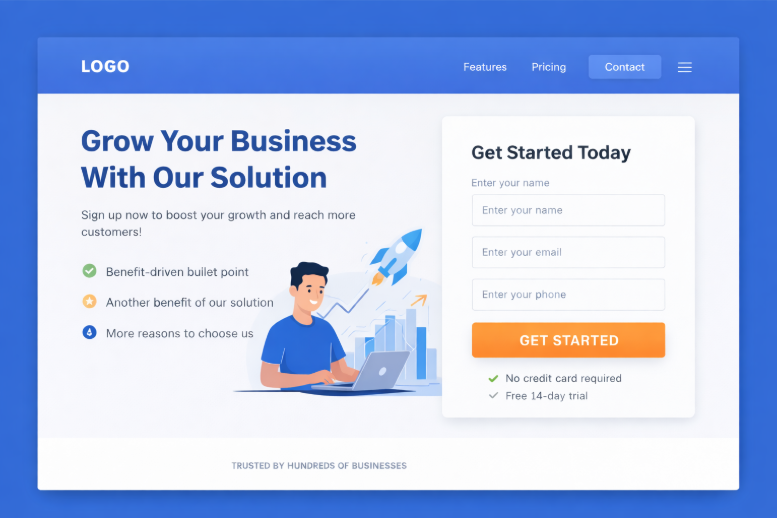
AI can help you:
Structure page sections logically
Optimize headlines and subheadings
Write persuasive benefit-driven copy
Generate FAQs based on real objections
Suggest strong calls-to-action (CTAs)
Key elements to include:
Clear headline
Strong value proposition
Social proof
Benefit-focused bullet points
Clear CTA
Objection-handling section
AI-driven heatmap and behavior prediction tools can even suggest layout improvements before launch.
Day 4: Launch Paid Traffic Campaigns
Now it’s time to drive traffic.
AI can support campaign setup on platforms like:
Google Ads
Meta Ads
LinkedIn Ads
Use AI to:
Identify high-intent keywords
Generate multiple ad variations
Optimize bidding strategies
Predict click-through rates
Automatically allocate budget toward top performers
Start with small budgets across multiple audience segments. The goal is testing, not scale—yet.
Day 5: Launch AI-Optimized Email Outreach
If you have a list, activate it.
AI can:
Personalize subject lines
Segment based on engagement history
Generate dynamic email content
Predict optimal send times
Automate follow-ups
Consider using AI-enhanced platforms such as:
HubSpot
Mailchimp
ActiveCampaign
Personalization dramatically improves open and click-through rates. AI enables personalization at scale without manual effort.
Day 6: Analyze and Optimize in Real Time
This is where AI truly shines.
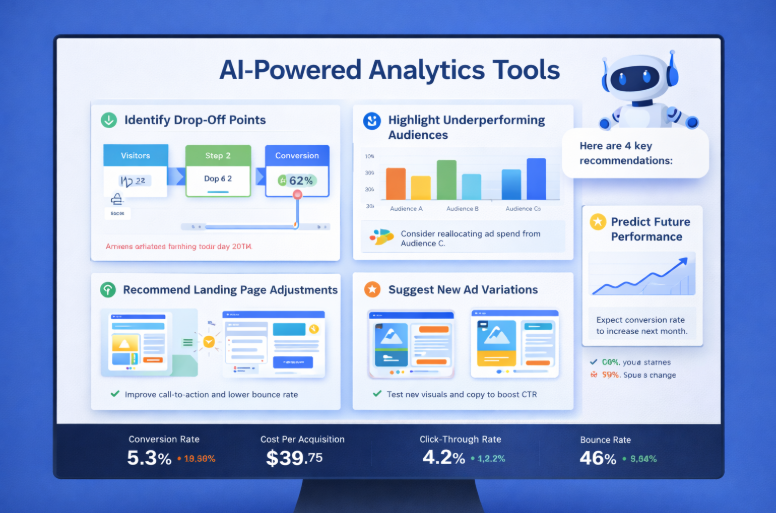
AI-powered analytics tools can:
Identify drop-off points
Highlight underperforming audiences
Recommend landing page adjustments
Suggest new ad variations
Predict future performance trends
Focus on:
Conversion rate
Cost per acquisition (CPA)
Click-through rate (CTR)
Bounce rate
Pause underperforming assets. Double down on winners.
Day 7: Scale What’s Working
By Day 7, you should have clear signals on what converts.
Use AI to:
Increase the budget on high-performing segments
Expand lookalike audiences
Refine messaging based on winning ads
Automate retargeting sequences
This is where your sprint becomes a repeatable acquisition engine.
Create a documented AI-powered workflow so the sprint can be repeated monthly or quarterly.
Best Practices for AI-Driven Customer Acquisition
To maximize results:
1. Combine AI with Human Oversight
AI accelerates execution, but human judgment ensures strategic alignment.
2. Focus on Data Quality
AI output quality depends on input quality. Clean data drives better results.
3. Test Aggressively
The sprint model depends on experimentation. Don’t rely on a single version of anything.
4. Track the Right Metrics
Vanity metrics mislead. Prioritize conversions and revenue.
Final Thoughts
A 7-day AI-powered customer acquisition sprint forces speed, clarity, and measurable action. By combining strategic planning with AI-driven execution, businesses can validate offers quickly, reduce acquisition costs, and build scalable marketing systems.
The companies winning today are not just using AI—they are structuring it into disciplined execution frameworks.
If you implement this sprint correctly, you won’t just generate traffic—you’ll generate conversions.